How to Prepare Your Garden Soil for the Next Season
Good harvests start with good soil, and most of the work that makes a spring garden easy happens the autumn before. This guide walks through the steps in order – from finding out what your soil actually needs to the final raking before you sow – and explains why each one matters.

In short
- Test your soil every three to five years, ideally in autumn before you add lime, manure or fertiliser.
- Organic matter is the most useful thing you can add: roughly a 15-litre bucketful per square metre each year.
- Never leave soil bare over winter – mulch it or sow a green manure.
- Loosen compacted soil instead of turning it upside down, and stay off soil that is wet.
- Fresh manure and lime belong on empty beds in autumn – not together, and never just before planting.
In this guide
Why autumn is the right time
Organic matter spread in autumn has the whole winter to be pulled down and broken down by earthworms and soil life. Frost does free work on heavy clods. Nutrients are held in green manure plants instead of being washed out by winter rain. And you are not racing the calendar the way you are in spring.
Missed autumn? Every step below still works in early spring – just use well-rotted materials rather than fresh ones, and allow a few extra weeks before planting.
Late summer – early autumn
Clear finished crops, take a soil sample, and sow green manures while the soil is still warm.
Mid to late autumn
Spread compost or manure, add lime only if a test says so, mulch any bare beds, and dig heavy clay if you dig at all.
Winter
Keep the soil covered and stay off it when it is wet or frozen. Plan next year’s crop rotation.
Early spring
Cut down green manures, loosen compacted spots, and rake seedbeds once the soil crumbles in your hand.
Get to know your soil first
Two gardens a few streets apart can need opposite treatment. Ten minutes of simple checks tells you what you are working with.
Texture: the feel test
Take a small handful of moist soil, rub it between your fingers and try to roll it into a sausage.
- Sandy soil feels gritty and won’t hold a shape. It drains quickly and warms up early in spring, but nutrients wash out of it easily.
- Clay soil is sticky when wet, rolls into a long, thin sausage and can be polished to a shine with a fingertip. It holds water and nutrients well but is slow to warm, drains poorly and compacts easily.
- Silty soil feels smooth and almost soapy. It is fertile, but its structure is easily damaged by treading.
- Loam is a balanced mix of all three – the crumbly, dark soil every gardener is aiming for.
Drainage: the hole test
Dig a hole about 30 cm deep and fill it with water. Let it drain, then fill it again. If the second filling has gone within a few hours, drainage is fine. If water is still standing the next day, you have a drainage problem – raised beds and generous amounts of organic matter help far more than deeper digging.
pH and nutrients: a soil test
A basic laboratory test (pH, phosphorus, potassium and organic matter) every three to five years tells you what your soil actually needs – and, just as usefully, what it doesn’t. The best time to sample is in autumn, after harvest and before you add anything: samples taken within about three months of liming, fertilising or manuring can give misleading results.
For a representative sample, take 10–15 small scoops from across the bed, down to about 20 cm. Avoid the edges and any spot where compost was recently piled, then mix everything in a clean bucket. Don’t sample straight after heavy rain. The lab will tell you how much soil to send.
Clear the beds – but not too tidily
- Pull out finished annual crops and compost the healthy leaves and stems.
- Cut peas and beans off at ground level and leave the roots in the soil to rot down.
- Keep diseased material off the home compost heap: clubroot-infected cabbage roots, onions with white rot and blighted potato tubers can survive a cool heap. Put them in your green-waste collection instead.
- Dig out perennial weeds such as couch grass, bindweed, dock and dandelion with as much root as possible – small root fragments left behind can regrow.
- Hoe or pull annual weeds before they set seed. The old saying “one year’s seeding, seven years’ weeding” is not far off: a single plant can shed thousands of seeds that keep germinating for years.
- Leave a few hollow stems and a pile of leaves at the edge of the garden: they shelter ladybirds, ground beetles and other helpful insects over winter.
Feed the soil with organic matter
Whatever soil you have, organic matter is the answer. It opens up heavy clay, helps sandy soil hold water and nutrients, and feeds the earthworms, fungi and bacteria that glue soil particles into the crumbly structure plant roots love.
- Garden compost – the more mature, the better. It can go on at any time of year.
- Well-rotted manure – dark, crumbly and no longer smelling of the stable. Fresh manure should only go on empty beds in autumn, so it has the winter to break down; never put it on just before planting.
- Leaf mould – rotted autumn leaves. Low in nutrients but excellent for structure. It takes one to two years to make, so start a pile this autumn.
- Straw or shredded leaves – not soil improvers on their own, but a good winter blanket on top.
How much?
As a soil improver, about one 15-litre bucketful per square metre each year (roughly 5–10 kg) is a sensible rate. Heavy clay benefits from more in the first few years – up to a wheelbarrow-load per square metre. Spread as a mulch on the surface, a layer of 2–5 cm works well.
Dig it in or leave it on top?
Both work. Spread on the surface in autumn, much of it will have been pulled in by earthworms by spring, and you avoid disturbing the soil. Forking it lightly into the top 10–20 cm mixes it in faster, which helps on heavy clay.
Loosen, don’t flip: to dig or not to dig
For generations, autumn meant turning the whole garden over with a spade. Today most soil scientists and horticultural bodies recommend disturbing soil as little as possible. Turning it upside down breaks up fungal networks and earthworm channels, speeds up the loss of organic matter, and brings buried weed seeds to the surface, where they germinate.
Compacted soil still needs help, though. The middle way is to loosen without inverting: push a fork in to its full depth, lever the handle back so the soil lifts and cracks, pull it out and move back 15–20 cm. The layers stay where they are, while air and water can get in. This is also the principle behind the broadfork, a wide fork with two handles.
Traditional digging
- Best for:
- Breaking new ground; heavy clay that has never been worked
- Watch out for:
- Hard on your back, brings weed seeds up – and never on wet soil
Loosening with a fork
- Best for:
- Compacted beds, poorly draining soil, paths you are turning into beds
- Watch out for:
- Work when the soil is moist but not sticky
No-dig (mulch on top)
- Best for:
- Established beds with decent structure
- Watch out for:
- Needs plenty of compost or mulch to get started
| Approach | Best for | Watch out for |
|---|---|---|
| Traditional digging | Breaking new ground; heavy clay that has never been worked | Hard on your back, brings weed seeds up – and never on wet soil |
| Loosening with a fork | Compacted beds, poorly draining soil, paths you are turning into beds | Work when the soil is moist but not sticky |
| No-dig (mulch on top) | Established beds with decent structure | Needs plenty of compost or mulch to get started |
Heavy clay is the one case where autumn digging still earns its place: dig it when it is dry enough, leave the clods rough and let frost break them into a fine crumb over winter. Light, sandy soils are better kept covered over winter and worked in spring.
Keep beds narrow enough – about 1.2 m – to reach the middle from the path, so you never need to stand on them. If you must step on a bed, stand on a plank to spread your weight. And go easy with a rotary tiller: on wet or clay soil it can create a hard, compacted layer just below the blades.
Don’t leave soil bare over winter
Bare soil loses nitrogen to winter rain, gets battered into a hard crust, and can wash or blow away. Covering it is one of the easiest wins in the whole garden calendar. You have two options, and you can mix them across beds.
Option 1: mulch
Spread compost, shredded leaves or straw over empty beds. On weedy ground, first lay plain brown cardboard with overlapping edges (remove any tape) and cover it with compost – by spring the cardboard will have softened and the weeds underneath will have weakened.
Option 2: green manure
Green manures are fast-growing plants sown to protect and improve the soil rather than to harvest. Their roots open up the soil and hold on to nutrients that would otherwise wash away; legumes also add nitrogen, mostly once the weather warms in spring. Sow them on beds that will stay empty until spring.
Winter rye
- Sow:
- Aug – Nov
- Over winter:
- Very hardy
- Good for:
- Heavy soils; dense roots improve structure. Rye residues hold back small seeds, so wait a few weeks before sowing carrots and the like.
Field beans
- Sow:
- Sep – Nov
- Over winter:
- Survives most winters
- Good for:
- Heavy soils; a legume that adds nitrogen.
Winter vetch
- Sow:
- Jul – Sep
- Over winter:
- Hardy
- Good for:
- A legume that adds nitrogen; pairs well with rye.
Phacelia
- Sow:
- Apr – Aug
- Over winter:
- Killed by hard frost
- Good for:
- Quick cover with flowers bees love. Frost-killed plants leave a ready-made mulch.
White mustard
- Sow:
- Mar – Sep
- Over winter:
- Killed by frost
- Good for:
- Very fast. It’s a brassica, so skip it where cabbages will follow or clubroot is a problem.
| Green manure | Sow | Over winter | Good for |
|---|---|---|---|
| Winter rye | Aug – Nov | Very hardy | Heavy soils; dense roots improve structure. Rye residues hold back small seeds, so wait a few weeks before sowing carrots and the like. |
| Field beans | Sep – Nov | Survives most winters | Heavy soils; a legume that adds nitrogen. |
| Winter vetch | Jul – Sep | Hardy | A legume that adds nitrogen; pairs well with rye. |
| Phacelia | Apr – Aug | Killed by hard frost | Quick cover with flowers bees love. Frost-killed plants leave a ready-made mulch. |
| White mustard | Mar – Sep | Killed by frost | Very fast. It’s a brassica, so skip it where cabbages will follow or clubroot is a problem. |
In spring, cut the green manure down before it flowers or turns woody. Let it wilt for a few days, chop it up, and either fork it into the top 20–25 cm or leave it on the surface under a layer of compost. Allow about a month before sowing or planting into that spot, while it breaks down.
Plan next year’s rotation now
While you still remember what grew where, sketch your beds. Moving each plant family to a different bed every year limits the build-up of pests and diseases that target that family, and spreads the demand on nutrients.
- Potatoes and tomatoes (nightshade family) – hungry crops; give this bed the most compost or manure.
- Peas and beans (legumes) – supply their own nitrogen and need little feeding.
- Cabbage family (cabbage, kale, broccoli) – heavy feeders that like firm soil; they do well after peas and beans.
- Roots and onions (carrots, beetroot, parsnips, onions, garlic) – prefer soil that hasn’t been freshly manured; fresh manure can make carrots and parsnips fork.
A common four-year cycle runs potatoes → legumes → brassicas → roots, then back to potatoes. The exact order matters less than keeping each family on the move.
Finishing off in spring
- 1Wait until the soil passes the squeeze test and has started to warm up. A few days’ patience saves months of compaction.
- 2Cut down green manures about a month before you plan to sow or plant.
- 3Rake mulch off seedbeds a week or two early so the sun can warm the soil; transplants can go straight in through the mulch.
- 4Loosen only where it’s needed. If a fork slides in to its full depth without effort, leave that soil alone.
- 5Rake beds for direct sowing to a fine, level surface. Potatoes and transplants don’t need it.
- 6Feed according to your soil test. Compost often covers most needs; hungry crops such as tomatoes, cabbages and potatoes may want a little extra.
Autumn soil checklist
Quick answers
Is it better to dig in autumn or in spring?
For heavy clay, autumn – as long as the soil isn’t wet – so frost can break up the clods. Light, sandy soils are better worked in spring, because bare sandy soil loses nutrients to winter rain. If your soil already has good structure, you may not need to dig at all: loosen only where it’s compacted.
It’s already November. Is it too late?
Too late for most green manures, but not for mulch. Spread compost, shredded leaves or straw over empty beds any time before the ground freezes. Winter rye and field beans may still establish in a mild autumn.
Can I use fallen leaves?
Yes. Run the mower over them and spread them as a mulch, or pack them into a wire bin or punctured bags to make leaf mould, which is ready in one to two years.
Do I need to lime every year?
No. Only lime when a test shows your soil is too acidic for what you grow. Too much lime makes nutrients such as iron and manganese harder for plants to take up, and it is far easier to raise pH than to bring it back down.
Should I use a rotary tiller?
Occasionally, on dry soil, for breaking new ground. Used often – or on wet soil – it breaks down crumb structure, chops perennial weed roots into pieces that each regrow, and can create a compacted layer just below the blades.
Sources & further reading
Tools that help with this job
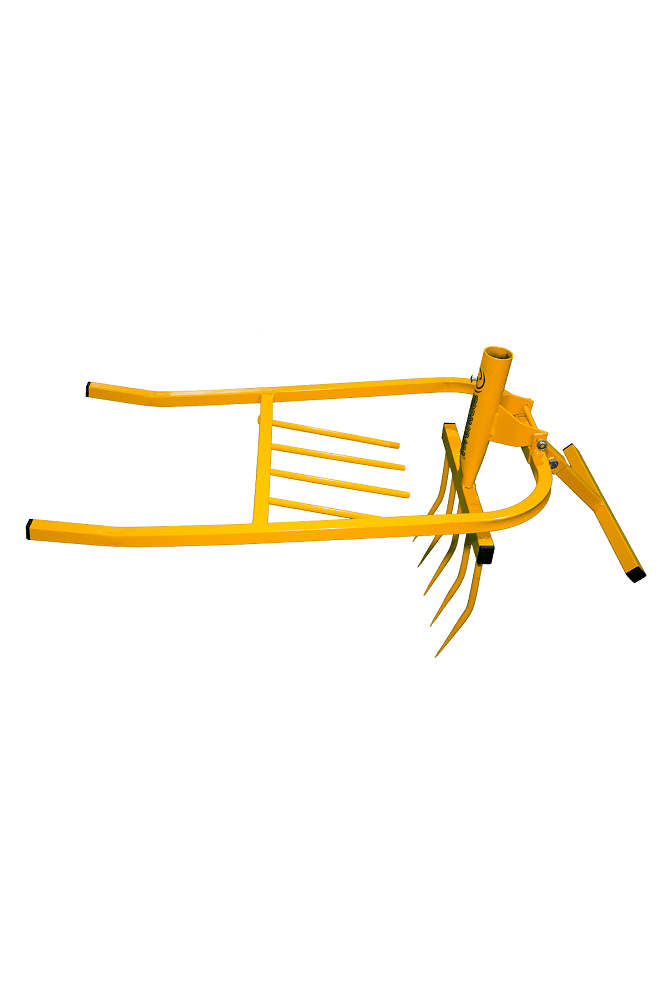
Innovative Tornadica Pitchfork
Innovative garden forks for demanding soil preparation, forged steel.
View tool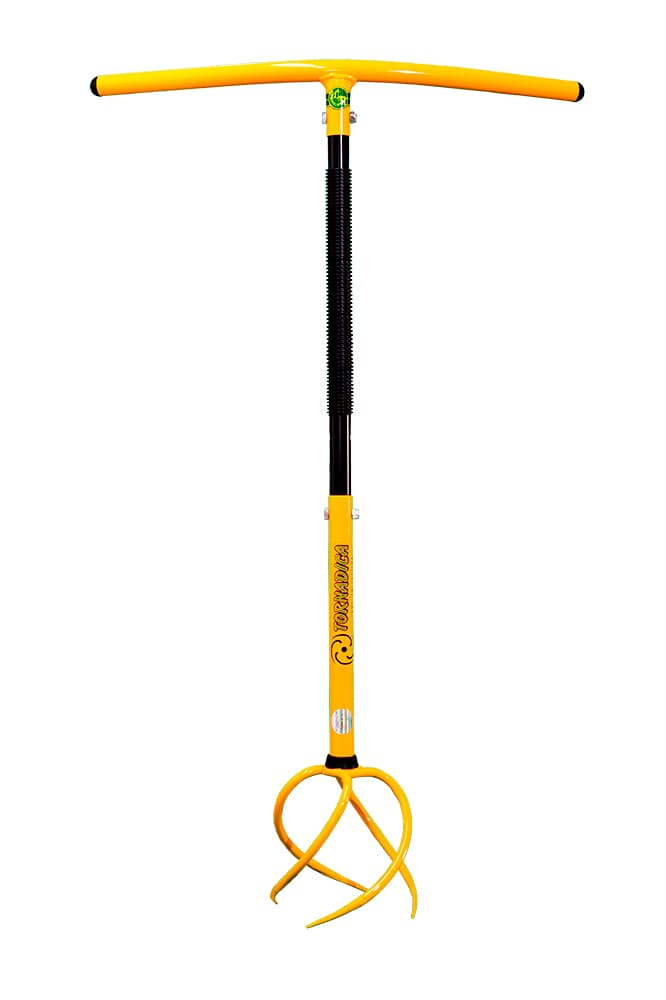
Tornadica Cultivator
Manual hand cultivator with forged steel "claws", 20 cm depth, ergonomic handle.
View tool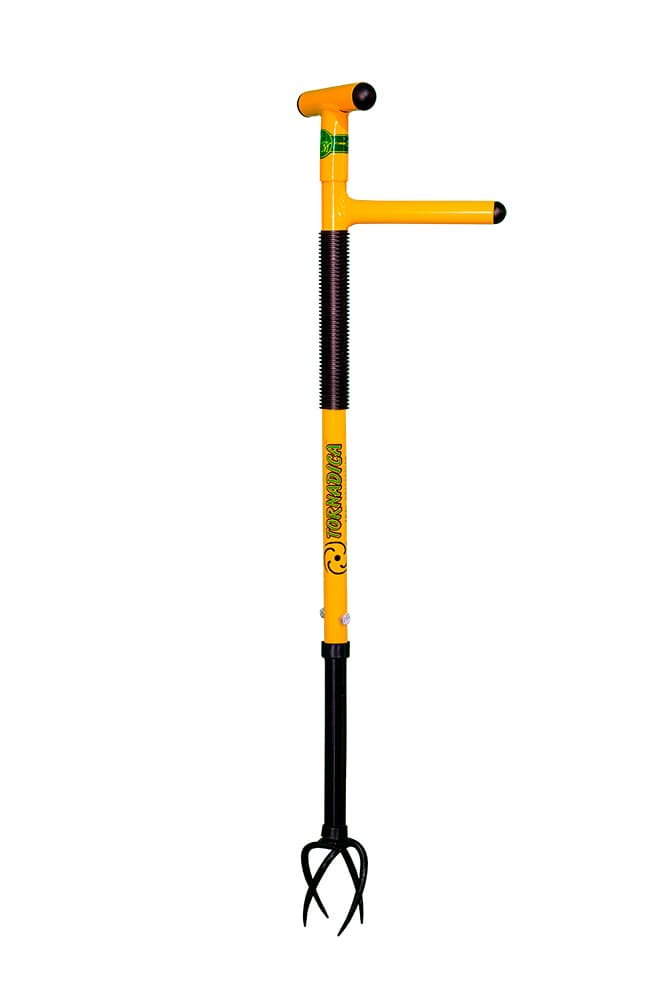
Tornadica Weed Extractor
Specialized weed extractor with an ergonomic lifting handle.
View tool